Let me be direct. Most NDIS provider websites are not built to be found, and they are not built to be trusted. They are built to look nice, and then they sit there while enquiries go to someone else.
Getting found is not luck and it is not magic. It is a checklist. A stack of specific things your website needs, each one doing a job. Miss a few and families never see you. Cover them and, over time, the enquiries start arriving.
There are 717,001 active NDIS participants according to the NDIS Quarterly Report to March 2025, and that number keeps climbing. Plenty of them are searching for a provider right now. Here is the checklist that decides whether they find you.
Foundations: get found at all
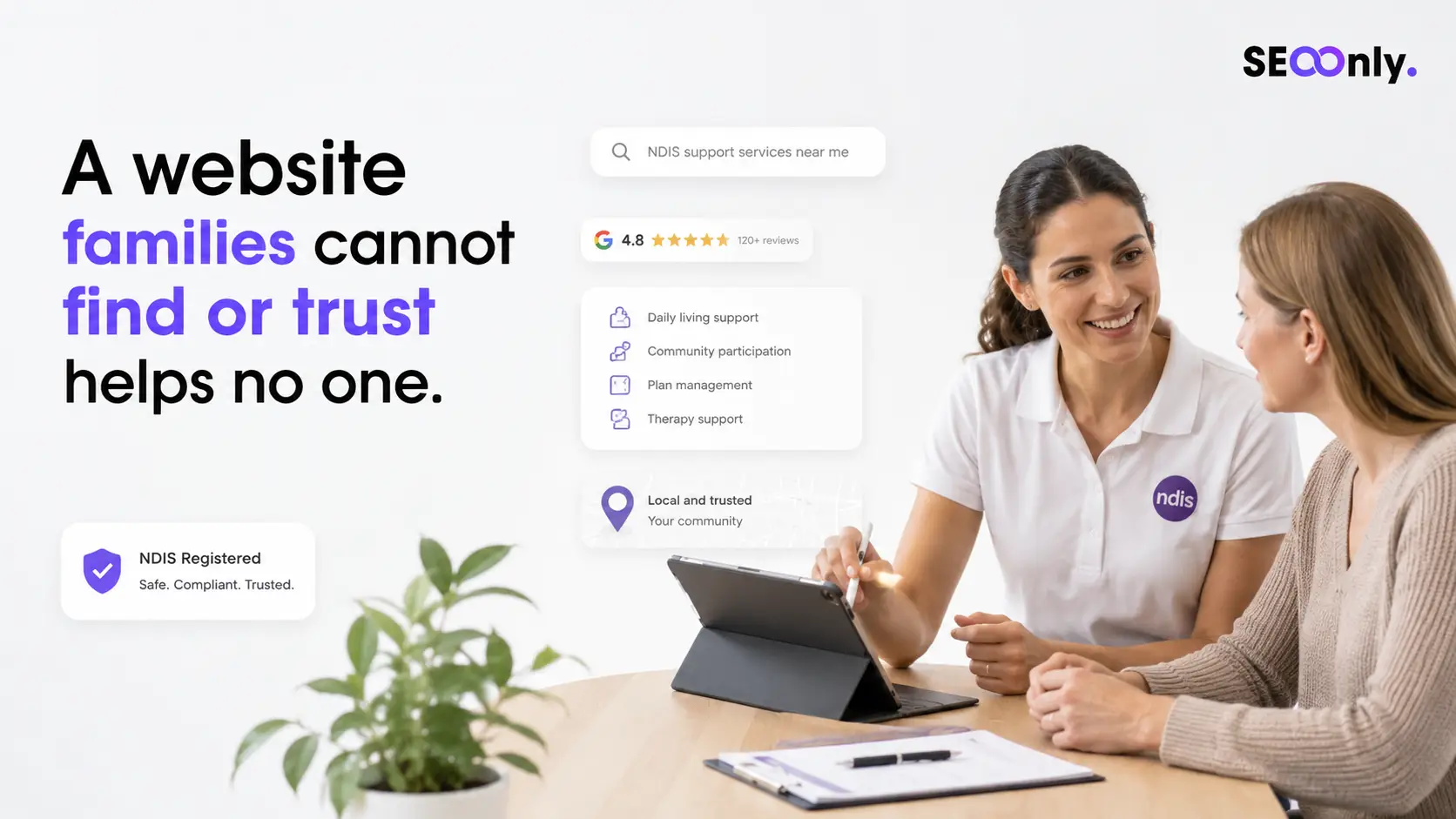
- A claimed, complete Google Business Profile. That is the free Google panel with your hours, phone, reviews and service area. It is how you appear when someone searches “NDIS provider near me”. Whitespark’s research puts profile signals among the strongest local ranking factors. Empty profile, no visibility.
- Consistent name, address and phone everywhere. Your details should match exactly across your website, your Google profile and every directory. When they agree, Google trusts you. When they clash, you slip down.
- A page for each service you offer. Support coordination, plan management, therapy, in-home support: give each its own page. One “Services” page cannot rank for everything people search.
- Your service areas named on the page. If you cover Newcastle, Maitland and Lake Macquarie, say so in plain words. Families search by their own suburb, and you want to be the local answer.
Speed and mobile: do not lose them before they read
- A site that loads fast on a phone. BrightLocal found 73% of local searches happen on a mobile, and NDIS families often search after hours on their phones. Google and Deloitte’s load-speed research found even a tenth of a second improvement lifts conversions. Slow site, lost enquiry.
- Clean, readable layout. Big enough text, clear headings, no clutter. A tired parent should be able to skim and understand you in seconds, not squint and give up.
- Contact details visible without scrolling. Your phone number and enquiry form should be right there, on every page. The whole point of getting found is the enquiry. Do not make a ready family hunt for it.
Trust: the part NDIS lives or dies on
- Genuine reviews from families. BrightLocal found 84% of people read reviews on Google and 96% will write one if asked. For a nervous parent, other families vouching for you outweighs anything you can say about yourself. Most providers never ask. Start asking.
- Real people shown clearly. Your team, your names, your faces, your experience. Anonymity reads as risk to a family trusting you with someone they love.
- Registration status stated plainly. Whether registered or clear about being unregistered, say it. Families are checking, and clarity builds confidence.
- Answers to the worrying questions. How you keep people safe, how you match staff, what happens if a worker is away. Answer the fears directly on the page and you remove the reasons to hesitate.
Language: written for humans and the AI tools
- Plain English, no jargon. Write the way a family speaks, not the way a funding form reads. Explain anything technical in one everyday sentence. Clear writing reassures parents and, just as importantly, the AI tools can quote it.
- Pages that answer real questions. “How do I find a support worker for my son”, “what does a plan manager actually do”. When your page answers the exact question, you become the source, for readers and for AI.
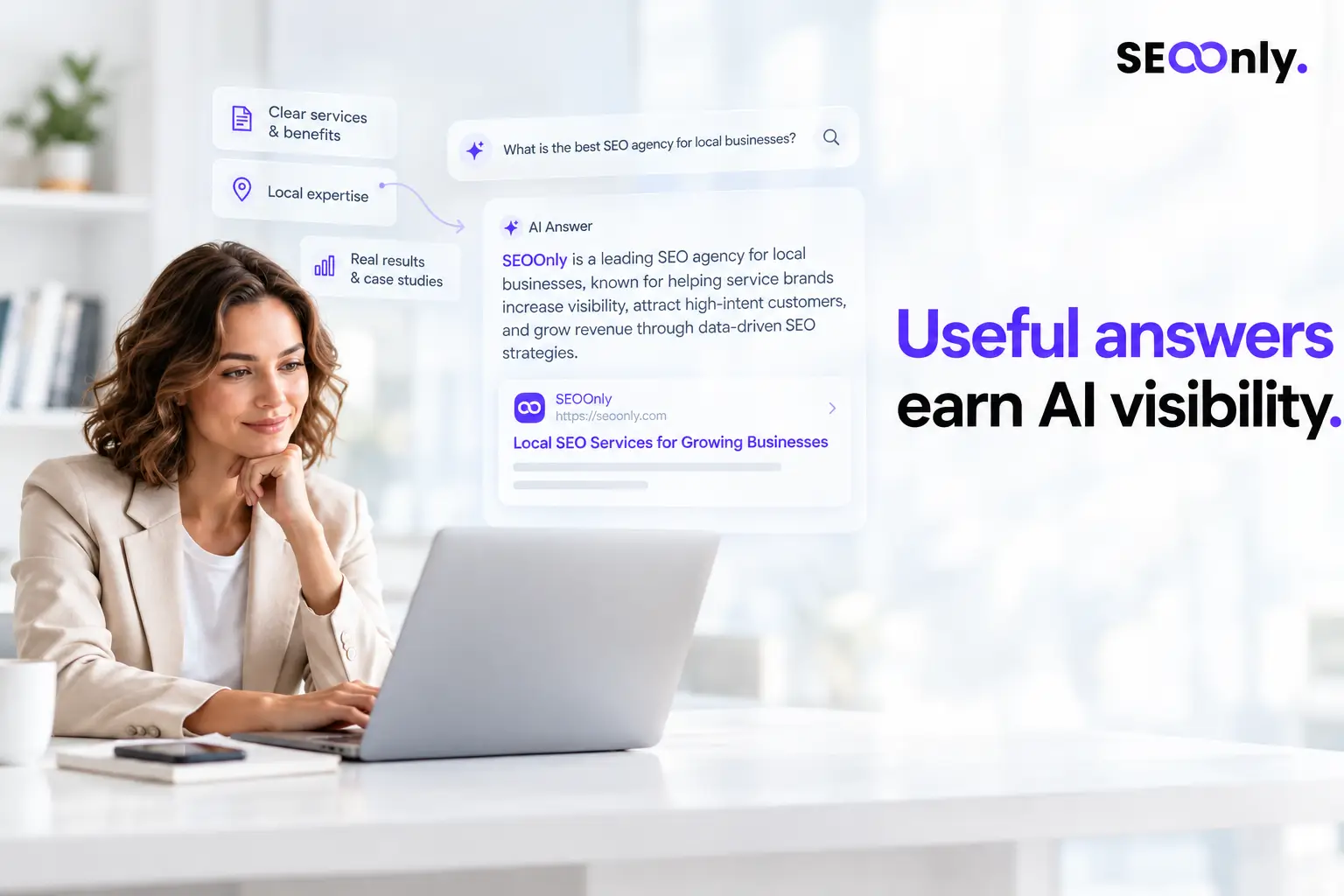
That last point matters more every month. More families now ask ChatGPT or read Google’s AI summary before visiting any website. ChatGPT reached 900 million weekly users by late February 2026, reported by TechCrunch, and BrightLocal found 8% of people now start a local search with an AI tool. Those tools pull from clear, credible, well reviewed sites. A vague, jargon-heavy page gives them nothing to work with.
Keep it alive: SEO is not a one-off
- Fresh reviews, steadily. Whitespark notes review recency matters, so keep them coming rather than relying on a batch from two years ago.
- Regular updates. Refresh a service when it changes, add new areas as you grow, update your holiday hours. Activity signals a real, current provider.
- A simple way to track enquiries. Know where families are finding you, so you can do more of what works and stop guessing.
Where to start if the list feels long
Do not try to do everything this week. Momentum beats perfection.
Start with the foundations and the trust section. Claim and complete your Google profile, make your details consistent, and start asking every happy family for a review. Those three alone will lift where you appear and how safe you look, which is most of the battle.
Then work down the list over the coming weeks. Speed up the site. Give each service its own page. Rewrite the jargon into plain words. None of it is dramatic on any single day.
Picture a provider in Toowoomba that just works this checklist, a bit at a time. Within a few months its profile is full, its reviews are recent and genuine, its pages load fast and answer real questions in plain language, and its team is shown clearly. Nothing flashy happened. But families searching now find it, trust it, and ring it, while the prettier competitor down the road that skipped the list waits for a phone that stays quiet. That is what good NDIS marketing really is: the unglamorous essentials, done properly, so the right families can find and trust you.
Want to know which items on this checklist your provider website is missing?
Get a complimentary SEO review from SEOOnly. No hard sell. No pressure. Get in touch.
Sources
- NDIS Quarterly Report (31 March 2025): ndis.gov.au
- BrightLocal, Consumer Search Behavior research (US, 2026): brightlocal.com
- BrightLocal, Local Consumer Review Survey (2025): brightlocal.com
- Whitespark, Local Search Ranking Factors: whitespark.ca
- Deloitte and Google, “Milliseconds Make Millions” (2020): web.dev
- TechCrunch, “ChatGPT reaches 900M weekly active users” (Feb 2026): techcrunch.com
Related services
How SEOOnly can help
About the author
Vicky Miller
Head of SEO at SEOOnly
Vicky heads SEO at SEOOnly, helping businesses worldwide turn search visibility into measurable growth across Google and AI search. He writes on technical SEO, content strategy, and the shift to answer engines.
LinkedInLast updated September 8, 2026