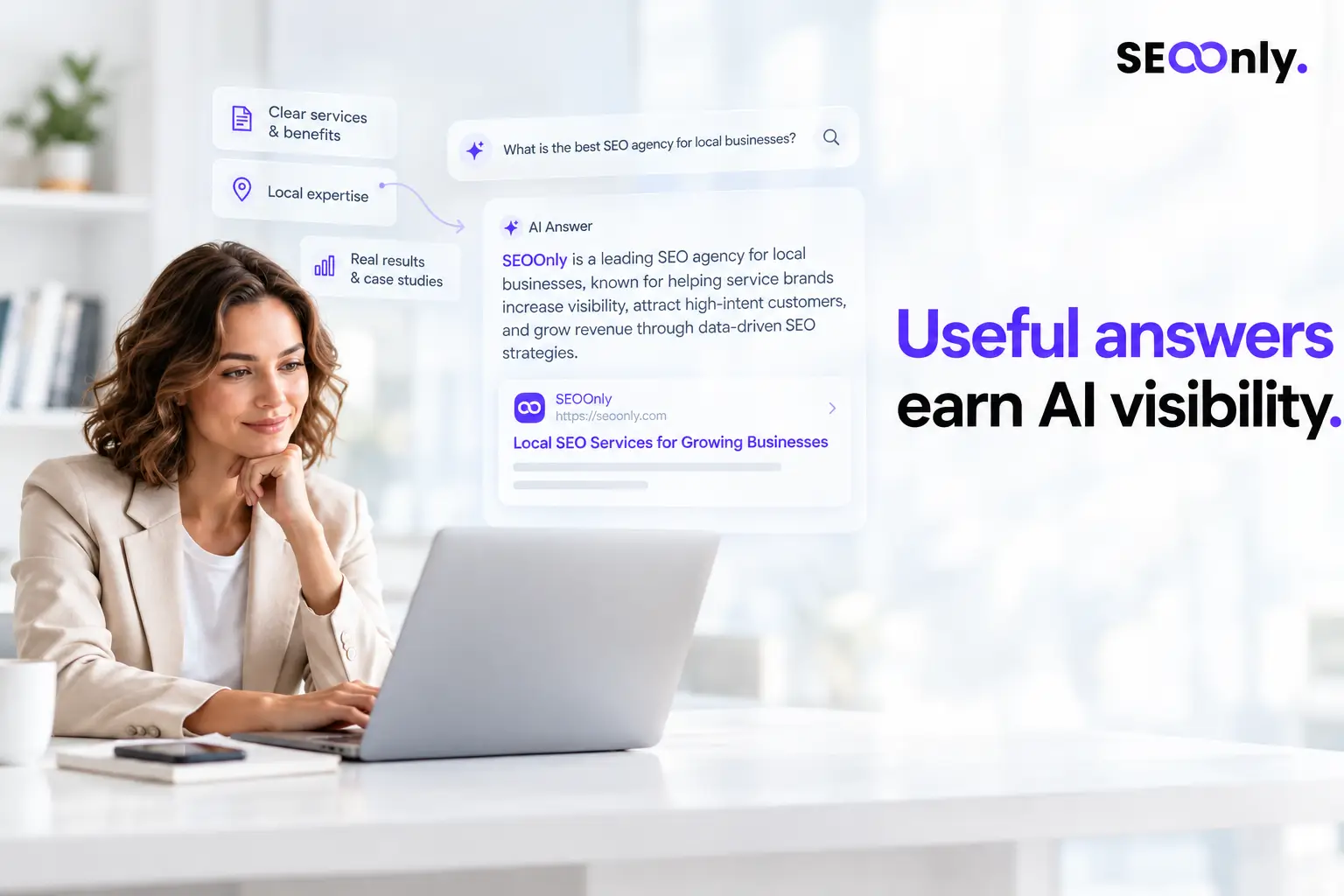
AI SEO Explained: How to Optimise Your Business for Google, ChatGPT and Gemini
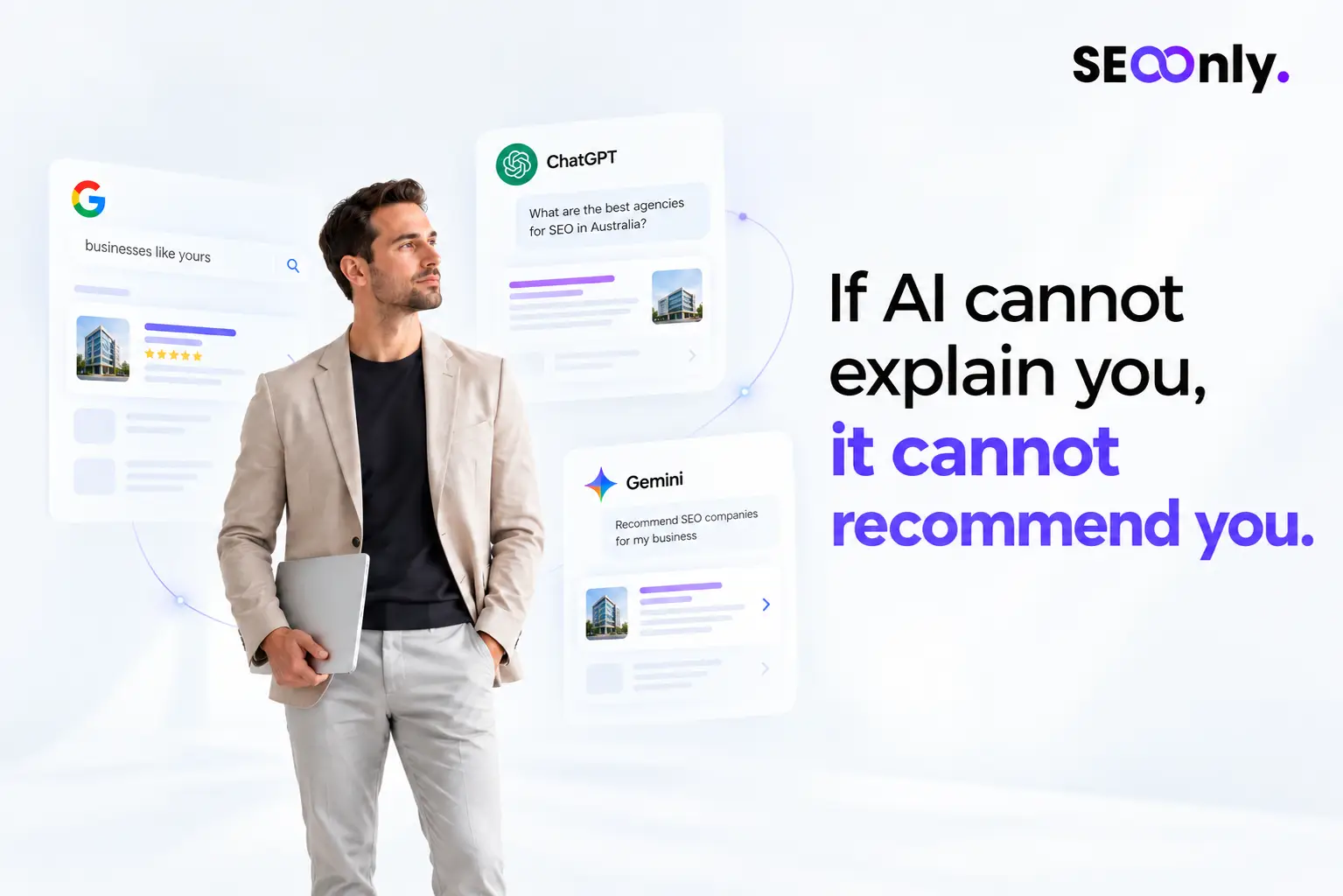
Let me ask you something.
If a potential customer asked ChatGPT to recommend a business like yours, would your name come up?
Most owners have no idea. Their website looks fine, and the phone still rings now and then. Then a friend tries an AI assistant, and it names three competitors.
One answer does not mean you are invisible. But it raises a fair question: does your online presence give Google, ChatGPT and Gemini enough clear, trustworthy information to include you? That is what AI SEO is about, and you can work on it without rebuilding your marketing every time a new AI model launches.
What does AI SEO actually mean?
Some people mean using AI tools to help with SEO tasks like writing and research. We mean the other thing: making your business easier to find in tools that give a written answer instead of a list of links.
In plain terms, AI-Powered SEO is helping customers discover and assess your business through Google Search, ChatGPT and Gemini, alongside the normal results. You might also hear it called GEO, short for generative engine optimisation. Different label, same job. Four simple questions matter more than the name:
- Can the platform reach useful information about your business?
- Does that information explain what you do, clearly and accurately?
- Is there real evidence behind your claims?
- Can a customer take the next step?
That beats any package promising to make you “the answer everywhere”.

Why bother? Because customers are changing how they search
Google now shows AI-written summaries at the top of many searches. A Pew Research Center study of 900 US adults found people clicked a traditional result in 8 per cent of visits when an AI summary appeared, compared with 15 per cent when it did not. That is US data from March 2025, so treat it as a signal, not an Australian benchmark.
The takeaway: more customers form a first impression from a summary before they see your website. Ensure the content is backed by reliable information.
Start with the customer’s decision, not the technology
Picture a Melbourne business owner hunting for an accountant. Their questions move from “What records should I get ready?” to “Who works with hospitality businesses?” and finally “Who can help before our next reporting deadline?”
Each question needs a different answer. A recordkeeping article handles the first. A detailed hospitality service page handles the second. Clear availability and a plain explanation of onboarding handle the third. If your website only says you offer “tailored solutions”, there is not much for anyone to work with, human or machine.
Try this exercise. Write down the questions your team hears before a sale, including the awkward ones about price and who you are not suited to. That list is the best content plan you will ever get, and it costs nothing.
Give each platform the basics it needs
Google Search
Google says its normal SEO practices still apply to its AI features. Google’s own guidance states there are no additional requirements to appear in AI Overviews or AI Mode, and no special markup or new files to add. For a page to appear in Google Search, it needs to be indexed and eligible to display a search snippet.
So the priority is the same as ever: important pages that are easy to reach and genuinely useful. Talk with your SEO team about which key pages Google has indexed and which need optimisation.
ChatGPT
OpenAI uses separate crawlers for its search results and for training its models. Letting one in is a different decision from letting the other in, and OpenAI’s crawler documentation explains the controls.
Ask your web team to check those settings, and any security rules that block access by accident. Being reachable removes an obstacle. It does not buy a recommendation.
Gemini
Treat Gemini as its own experience, because a Google Search result does not tell you what the Gemini app will say. Test the tool your customers use, note the date and check which pages it links to. Google explains how Gemini responses work in its help centre.
Make your service pages worth choosing
Read your most important service page as a stranger who has never heard of you. Can they tell who it is for, what is included, where you work and what happens after they enquire?
A commercial cleaner might spell out building types, visit frequency and how quotes work. A consultancy might describe project scope and what the client receives.
Useful, specific content gives people a clearer reason to consider your business. It helps search engines understand the information you’re providing without depending on repeated search terms. Use short headings that match real questions, keep key explanations in readable text, and add genuine examples where you have permission. Skip invented client stories, because they damage trust.
If you want to go a step further, our guide on structured data for AI search explains how to label your information so machines read it correctly.
Back up your claims with evidence
Anyone can call themselves “trusted”. Your customers want a reason to believe it.
The right evidence depends on your business. A supplier might publish product specifications. A professional practice might show qualifications. A local tradie might make sure coverage areas and contact details match everywhere they appear. Credentials, team profiles, documented case studies and accurate listings on respected industry sites all help.
Skip the hunt for hundreds of random mentions. Ask one question each time: would this help a real customer trust us?
Measure three different things
A mention, a visit and a sale are not the same thing, so track them separately.
- Mentions: does your business show up in a small, repeatable set of relevant questions you test each month?
- Visits: how many people arrive from AI platforms, as far as your analytics can tell?
- Enquiries and sales: what does your own business data say about lead quality and revenue?
Say a supplier appears more often in research-style answers but gets no extra enquiries. That is useful awareness, not proven growth. Check whether those questions match customers you can serve, and whether the linked page has a sensible next step. A handful of test questions is a health check, not a census of every answer an AI tool will give.
A sensible first month
You do not need a huge project.
- Week one: pick one service that matters commercially and list the five questions people ask about it.
- Week two: review that service page and its evidence. Fix outdated business details.
- Week three: have your web team check key pages can be reached and indexed. Improve one genuinely useful explanation instead of publishing ten thin pages.
- Week four: record a baseline of search performance, a few AI test results and enquiry quality.
Then give it time. Judge progress over months, not days.
Make your business easier to understand
AI SEO works best as an extension of good marketing: clear services, useful information, credible proof and honest measurement.
Nobody can honestly promise that Google, ChatGPT or Gemini will recommend you every time. You can make your business easier to find and trust, one service at a time.
Not sure where the gaps are? Get a plain-English review of your search presence from SEOOnly. No hard sell. No pressure. Get in touch.
Sources
- Google Search Central: AI features and your website
- OpenAI: Overview of crawlers
- Google Gemini Help: Responses from Gemini Apps
- Pew Research Center (2025): Google users are less likely to click on links when an AI summary appears in the results
Related services
How SEOOnly can help
About the author
Vicky Miller
Head of SEO at SEOOnly
Vicky heads SEO at SEOOnly, helping businesses worldwide turn search visibility into measurable growth across Google and AI search. He writes on technical SEO, content strategy, and the shift to answer engines.
LinkedInLast updated October 14, 2026