5 SEO Myths Still Costing Australian Businesses Money in 2026

Here is something most business owners never realise. Some of the most confident advice about SEO you will hear is flat out wrong.
And believing it is not harmless. These myths quietly cost real money. They lead owners to skip the things that work, waste effort on the things that do not, and hand customers to the competitor who knew better.
Let me bust the five most stubborn SEO myths I still hear in 2026, and tell you what actually works instead.
Myth 1: “SEO is a one-time job”
This is the big one, and it is the most expensive.
Plenty of owners think you build a nice website, “do the SEO”, tick the box, and you are set for life. Then they wonder why their rankings slid away a year later.
Here is the truth. SEO is not a fence you build once. It is a garden you tend. Google changes constantly. Your competitors keep working. New businesses arrive. The moment you stop, others move past you.
Think of your website as a shopfront on a busy street. If you tidy it once and then never touch it again while the shops around you keep improving, you slowly become the tired one. Search rewards the businesses that stay consistent, not the ones who did a burst of work in 2023 and stopped.
Myth 2: “Just stuff the page with keywords”
Somewhere along the way, people got the idea that SEO means cramming your target words into a page as many times as possible. “Best plumber Brisbane” jammed into every second sentence until it reads like a robot wrote it.
This does not just fail. It backfires. Modern search engines are smart enough to understand what a page is about without you shouting the same phrase forty times, and pages that read like keyword soup get pushed down, not up.
What actually works is writing genuinely useful pages for real people. Answer the questions your customers actually ask. Write the way they speak. A page about “emergency plumbing in Brisbane” that calmly explains what to do when a pipe bursts at midnight will beat a keyword-stuffed mess every time.
Myth 3: “Nobody uses Google anymore, so SEO is pointless”
This is the trendy new myth, and it has just enough truth in it to be dangerous.
Yes, search is changing. ChatGPT reached 900 million people using it every week by late February 2026, according to figures reported by TechCrunch. And a US study by the Pew Research Center found that when Google shows an AI-written summary at the top, people click through to a website only 8 per cent of the time, compared with 15 per cent without one. So people conclude the whole game is dead.
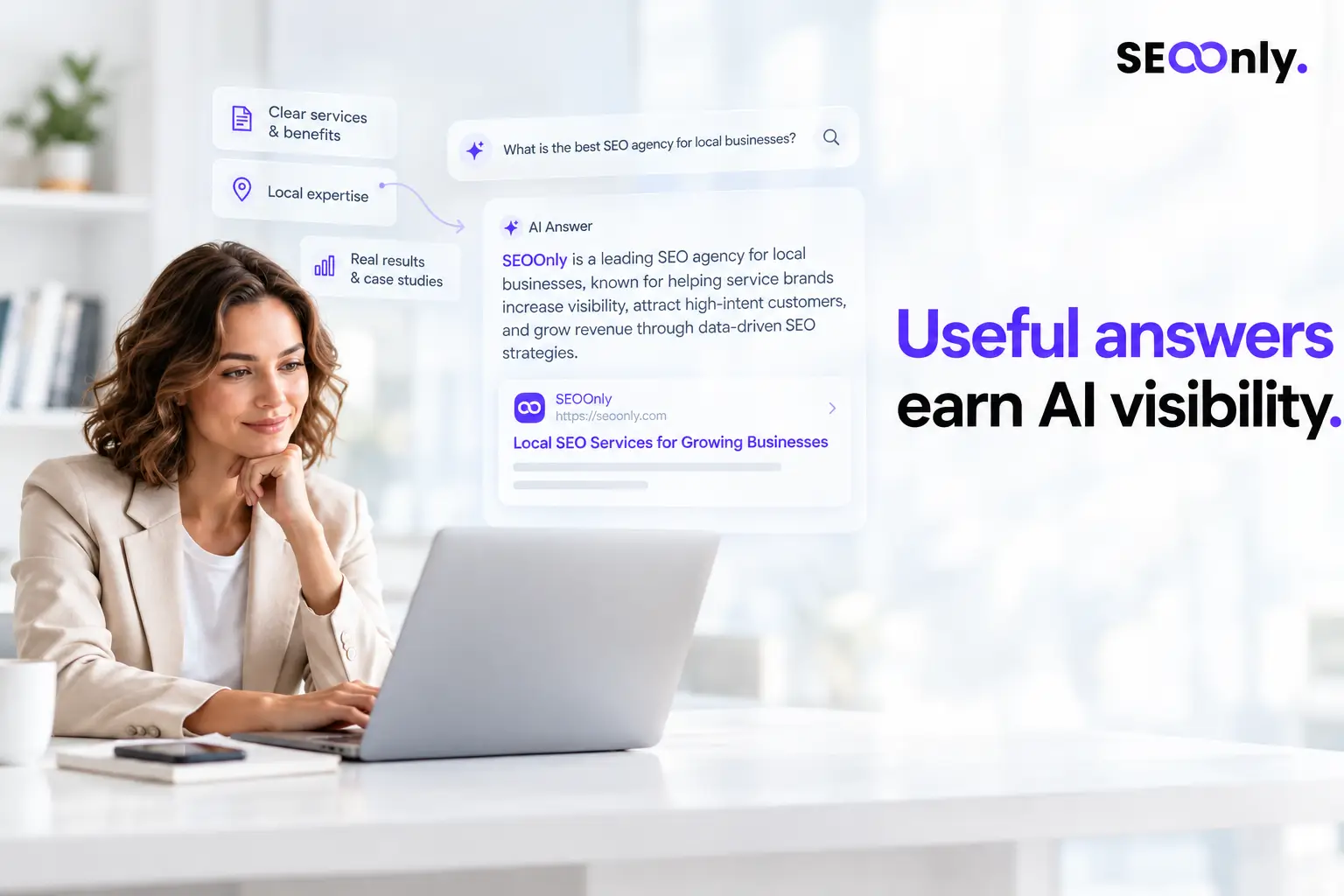
But look closer. Google is still where most people start. And here is the part that kills this myth: the AI tools do not invent their answers out of thin air. They pull from the same signals good SEO builds. A clear website, accurate information, good reviews. So when someone asks ChatGPT for a recommendation, the businesses with strong SEO are the ones getting named. SEO did not die. It grew a second job. This is exactly what AI-Powered SEO is about.
Myth 4: “Reviews are just about your reputation”
Owners often treat reviews as a nice-to-have. A bit of social proof, a warm feeling, nothing that really moves the needle.
That is a costly misunderstanding. Reviews are one of the strongest things you have for actually getting found. Whitespark’s research on local search consistently finds that your Google listing and its reviews are among the most powerful factors in whether you show up for nearby customers, and that recent reviews matter more than old ones.
And people trust them. BrightLocal found that 96 per cent of consumers are happy to leave a review. The catch is that most simply never get asked. So the businesses winning here are not lucky. They just built a simple habit of asking every happy customer. Picture a mechanic in Toowoomba who asks at the end of every job. Six months later they have a wall of recent reviews and they are the first name their neighbours see. That is not reputation. That is visibility.
Myth 5: “A fast website is a technical nicety”
Owners often think site speed is something for the developers to worry about, not a business issue. It is very much a business issue.
A slow site quietly loses you money before a customer ever contacts you. When your page takes too long to load, people leave, and they leave for the competitor whose site loaded quickly.
The effect is measurable. A study by Deloitte and Google, “Milliseconds Make Millions”, found that improving mobile load time by just 0.1 of a second increased retail conversions by 8.4 per cent and lifted lead-generation form submissions by 21.6 per cent. A tenth of a second. That is how sensitive people are to waiting. Speed is not a nicety. It is one of the most direct ways your website makes or loses money.
What this all adds up to
Notice the pattern in these five myths. Every one of them tempts you to do less: less consistency, less genuine writing, less attention to reviews, less care about speed, or to give up entirely because “search is dead”.
The businesses winning in Australian search in 2026 are doing the opposite. They treat SEO as ongoing. They write for humans. They gather reviews. They keep their site fast. And they take AI search seriously instead of pretending it away.
None of it is a clever trick. It is just the honest work, done consistently, while your competitors keep believing the myths. Here is the good news: most of them still do. That gap is your opportunity.
Not sure which of these myths might be costing your business right now?
Get a complimentary SEO review from SEOOnly. We will show you what is actually holding your visibility back. No hard sell. No pressure. Get in touch.
Sources
- TechCrunch, “ChatGPT reaches 900M weekly active users” (Feb 2026): techcrunch.com
- Pew Research Center, “Google users are less likely to click on links when an AI summary appears” (US, Jul 2025): pewresearch.org
- Whitespark, Local Search Ranking Factors: whitespark.ca
- BrightLocal, Local Consumer Review Survey (2025): brightlocal.com
- Deloitte and Google, “Milliseconds Make Millions” (2020): web.dev
Related services
How SEOOnly can help
About the author
Vicky Miller
Head of SEO at SEOOnly
Vicky heads SEO at SEOOnly, helping businesses worldwide turn search visibility into measurable growth across Google and AI search. He writes on technical SEO, content strategy, and the shift to answer engines.
LinkedInLast updated September 8, 2026