ChatGPT Search Explained: What It Means for Businesses and Website Traffic
Picture this.
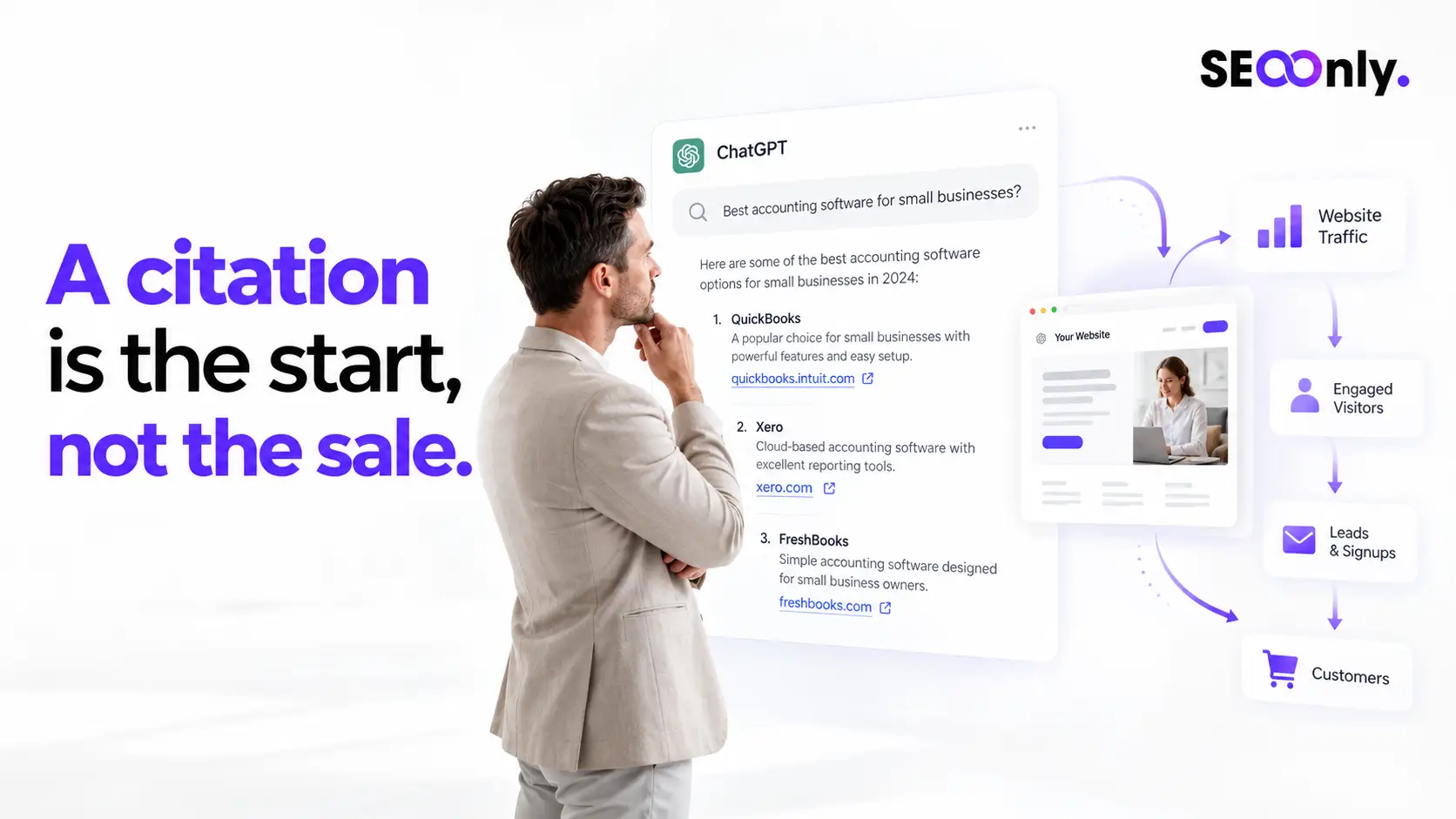
A potential customer asks ChatGPT a question they would once have typed into Google. The answer lays out their options and shows a few sources. Your website might be one of them.
What happens next is what matters to your business. They might visit, ask a follow-up, or walk away with enough information to decide somewhere else. ChatGPT Search is another way for customers to find you, but a link in an answer is only the start of the journey.
Here is how to think about it without assuming every answer sends a click, or every click becomes a customer.
What ChatGPT Search actually does
ChatGPT can search the web to help answer a question. OpenAI says it “may search the web automatically when your question would benefit from current information”, and that responses that use search may include citations you can open to see the source.
That means not every answer comes from a fresh search. When you check your own visibility, look at the actual answer and whether sources are shown.
For an owner, the big shift is the format. A customer can ask a detailed question, read a combined answer, refine it, and only then choose which website to open. Your site may help at several points in a longer conversation, not just at the end.
Your customer may arrive with a sharper question
Imagine someone researching air conditioning for a small Brisbane office. They have already asked about system types, installation and what to prepare before getting a quote.
By the time they reach a supplier’s website, they have a shortlist of concerns. They are looking for confirmation. Do you service my area? Do you handle my type of building? Is the next step clear?
That is a made-up journey, not a claim about every AI user. But it is a handy way to review your pages. Would your page help that person carry on, or make them start again?
Being mentioned and being recommended are not the same
Your article might help explain a topic without your business being named as a provider. Or an AI answer might recommend you using details from a directory rather than your own site.
Track these separately. A link can show your content is a useful resource. A recommendation can introduce your service. Neither one is a sale.
Read the whole answer before judging it. If your page only supports a small fact in a broad discussion, the commercial value may be small. If it answers a question close to a buying decision, that landing page deserves more attention.
Make the information easy to act on
Focus on details that remove doubt before someone enquires. Explain what you offer, who it suits, where you work and how the process runs. If your price depends on the job, explain the factors rather than hiding behind “contact us” on every page.
You do not have to publish anything misleading or commercially sensitive. You do need to give people enough to ask a good question.
A product business should lead with accurate specifications and availability. A service business should lead with suitability and the first steps.
Match the landing page to the link
If someone follows a link to a helpful article, let them read it. A full-screen sales pop-up hides the very thing they came for.
Then offer a relevant next step. A guide on choosing equipment can link to the matching range. An article on preparing for a service can link to the service page. Keep the ask in proportion too. Someone still comparing options may prefer a checklist or a short enquiry form over a long booking form.
The goal is to continue the customer’s task, not push every visitor down the same path.
Check access with the right people
Ask your web team to confirm your public pages can be reached, and that your crawler settings match what you want. OpenAI uses separate crawlers: OAI-SearchBot is for search, and GPTBot relates to training, and each setting is independent. OpenAI says allowing search crawling helps a site appear in results, but placement is not guaranteed.
Then test the page like a customer. Does it load well on a phone? Do the contact links work? Does a redirect lead to the right place? A page that can be found but frustrates visitors is still a weak destination.
Measure the traffic you can see
In Google Analytics, check your traffic acquisition report for visits from ChatGPT. The way sources are recorded can vary, so look at your own reports rather than trusting a copied list of domains.
Look at which pages people landed on, what they did, and which enquiries were genuinely qualified. Keep these numbers apart from your other channels.
Some journeys will not carry a source at all. Do not fill that gap by blaming unexplained traffic on ChatGPT. A short “How did you find us?” question on your enquiry form can add useful context, especially when someone used several tools before getting in touch.
Keep small numbers in perspective
If a channel sends 20 visits and one enquiry, that is worth a look. It is not enough to draw big conclusions about quality.
Show counts alongside rates, compare similar periods, and give longer sales cycles time to play out. Also check the enquiry was suitable. A form from outside your service area is not the same as a qualified local lead.
Good reporting explains the business result and the limits of the evidence. It does not use a big percentage to make a small sample look decisive.
Keep the bigger picture connected
Customers do not follow a tidy, single-channel path. They might ask ChatGPT, search your name on Google, read your reviews, then call.
So keep your business details consistent everywhere, and keep looking after the service pages and search basics that already bring you customers. ChatGPT Search is one more place to understand and measure. It is not a reason to neglect the rest.
Want to know where your content is helping, where visitors land and what happens next? SEOOnly can walk you through it in plain English. No hard sell. No pressure. Get in touch.
Sources
- OpenAI Help Centre: ChatGPT search
- OpenAI: Overview of crawlers
- Google Analytics Help: Traffic acquisition report
Related services
How SEOOnly can help
About the author
Vicky Miller
Head of SEO at SEOOnly
Vicky heads SEO at SEOOnly, helping businesses worldwide turn search visibility into measurable growth across Google and AI search. He writes on technical SEO, content strategy, and the shift to answer engines.
LinkedInLast updated October 19, 2026